On Building Intuition in AI/ML
Read on Omnivore | Read Original
Highlights
1. Don’t Go Straight to the Papers
Papers, especially frontier ones, assume strong intuition and feel for a topic to be properly understood and appreciated. ⤴️
2. Don’t Go to the Survey Papers, Either
While definitely a step in the right direction from reading frontier papers, in my experience, survey papers might assume too much prior knowledge (e.g. math, theory, etc) or are too general and don’t provide enough detail to be useful. ⤴️
3. Online Courses/Lecture Series Are Inefficient ⤴️
Step 0: Create a Project
Create a project (on GPT/Claude) and title it the concept you want to learn (e.g. “Variational Inference” or “Transformers”). ⤴️
Step 1: Build High Level Intuition
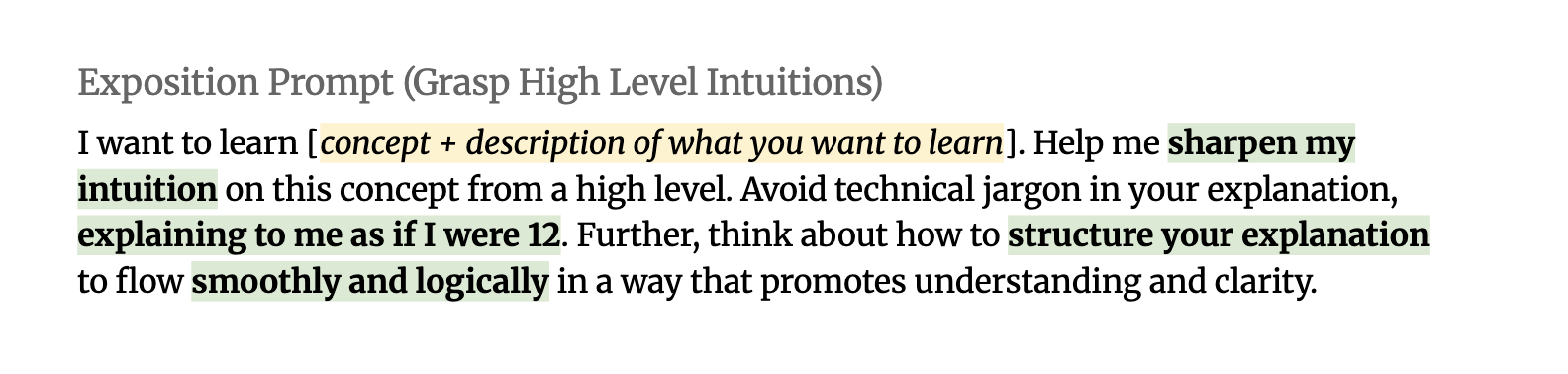
Your first goal is to gain a high level intuition of the concept. ⤴️
Here’s a prompt I like to use with some prompting tricks I’ve found useful highlighted:
Step 2: Rapidly Identify Holes in Your Intuition and Fill Them
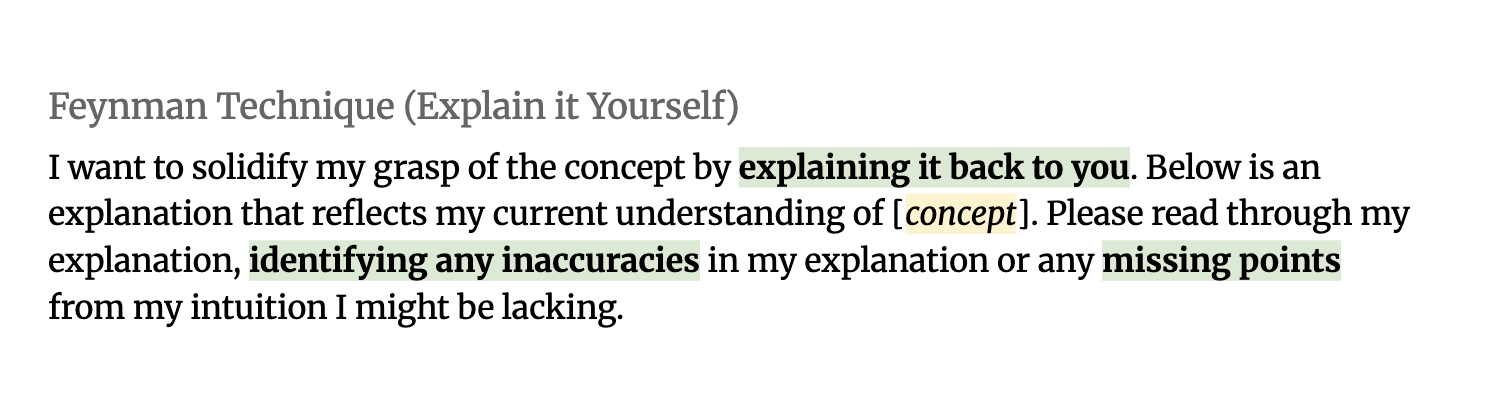
Ask any follow-up questions you have. Then, once you feel like you’ve gotten a basic grasp, try re-explaining the concept back to the LLM from scratch. ⤴️
You might also find that in re-explaining this concept, a series of new follow up questions might come up. Save these and maybe even ask them first before resuming your explanation of the concept.
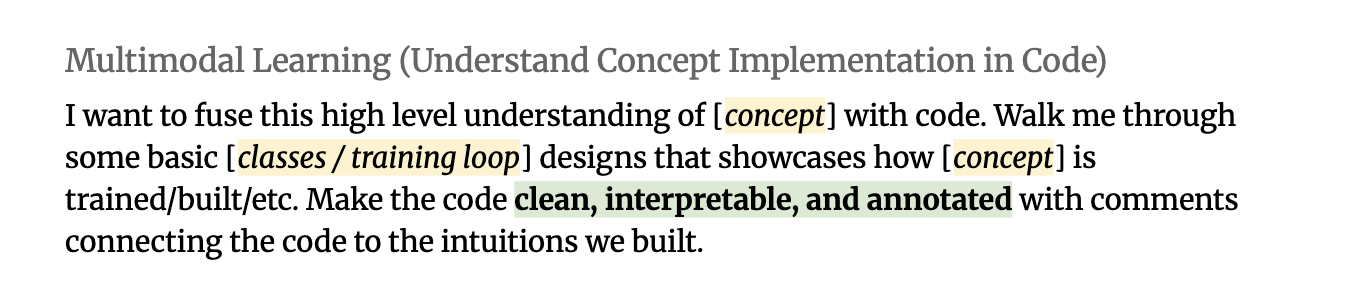
Step 3: Make Learning Multimodal
After going through the Feynman loop a couple of times (explaining the concept, realizing what parts of the concept you don’t understand, then explaining again), it’s time to go one step further by making your learning multimodal. Ask the model to implement the concept in annotated, interpretable code. ⤴️